
The challenge
Asda instructed Ovrsite to conduct inspections across a mix of office and retail sites. Each site has different building typologies, different ages of construction, and different access constraints, but the portfolio required consistent, comparable data to inform maintenance planning and capital expenditure decisions across the estate.
Traditional building surveys across a geographically dispersed portfolio take months to programme and produce inconsistent outputs depending on which surveyor attends which site. Asda required a single methodology applied uniformly, with findings that could be compared across the portfolio on a like-for-like basis.
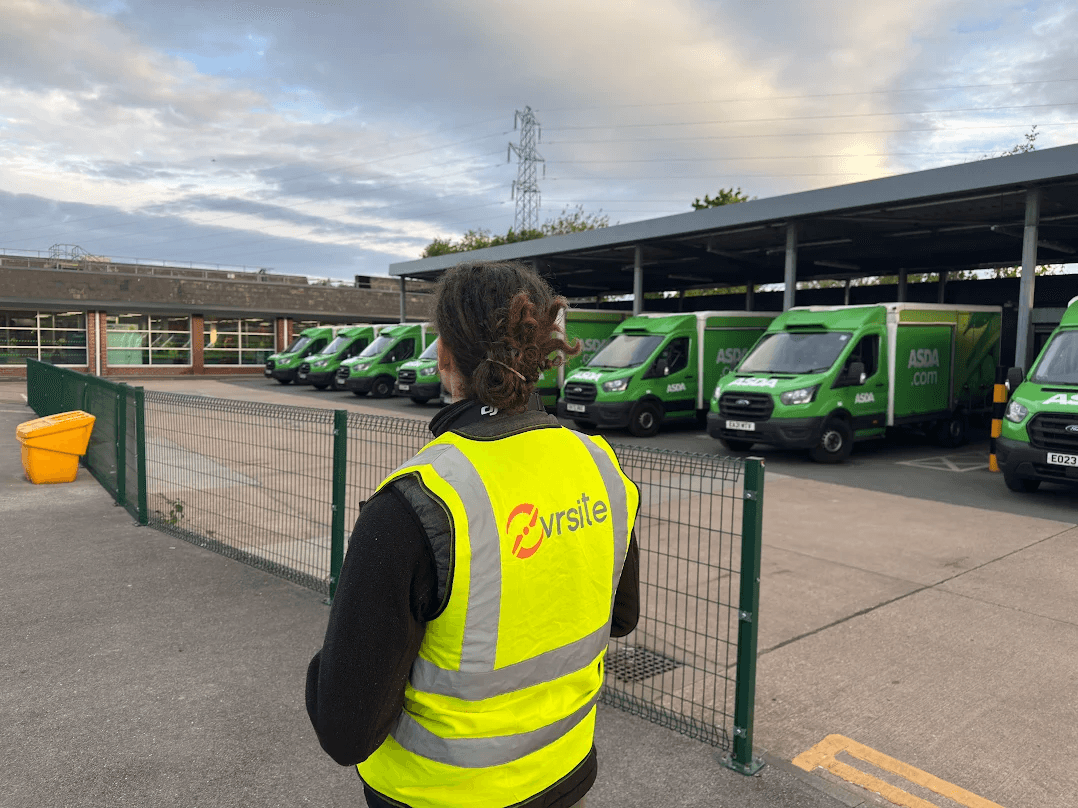
Every inspection also had to work around a live retail environment. Customer safety, car park access, delivery schedules, and normal trading hours all had to be maintained throughout.
What Ovrsite delivered
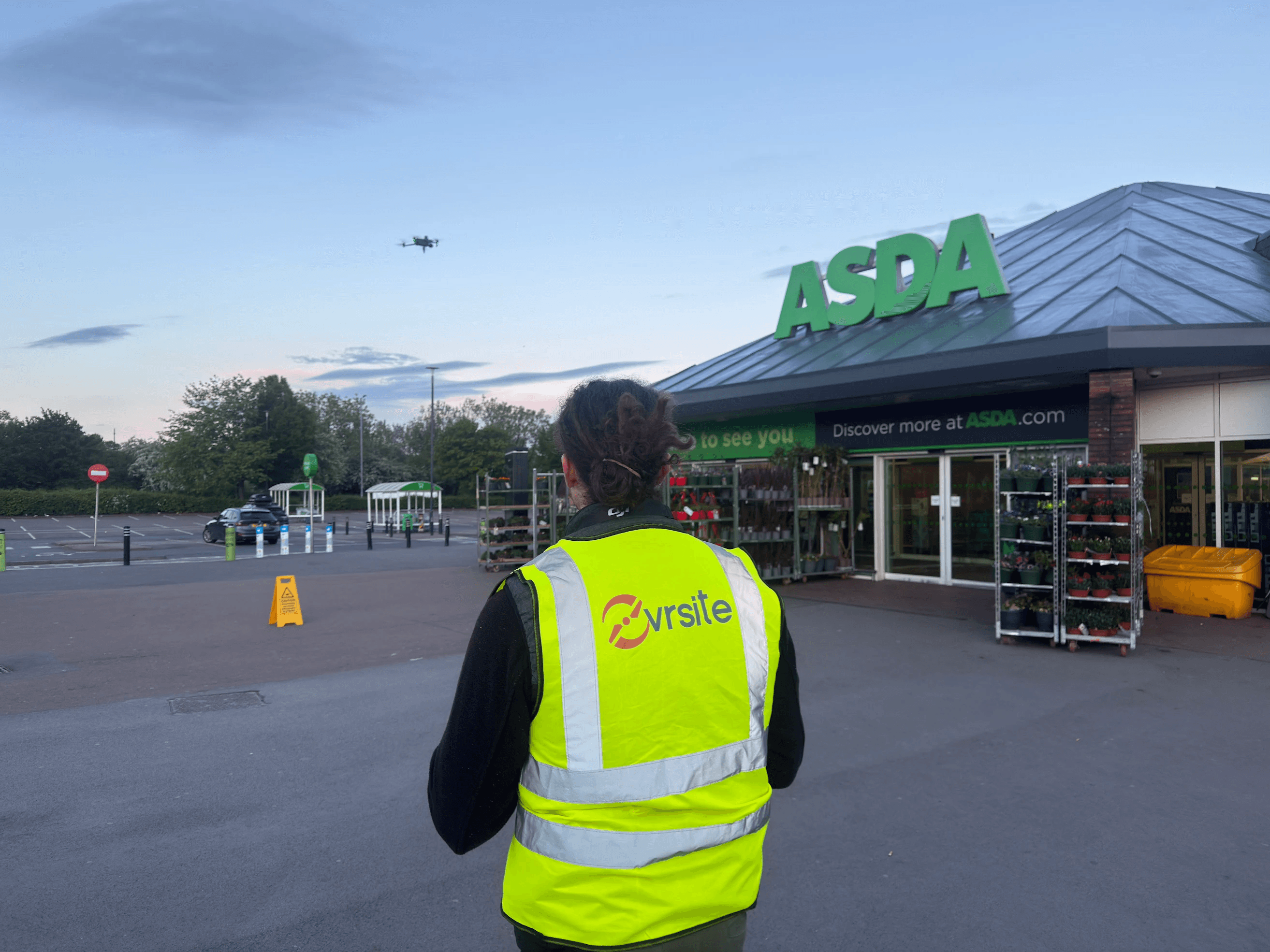
Ovrsite applied the same capture and analysis methodology across all sites. Every inspection was completed during normal trading hours without requiring store closures, customer exclusion zones, or disruption to delivery operations. The caution signage and landing pad were positioned to keep the public informed while the operation ran.
Visual and thermal inspection data was captured across each site. AI-assisted analysis produced a graded condition record per store, with findings costed to a consistent schedule. This gave Asda a like-for-like comparison across the portfolio for the first time.
The result
Asda received standardised, comparable condition data across its office and retail portfolio in a format suitable for board-level reporting and CAPEX budgeting. Each site report follows the same structure and grading methodology, removing the variability that comes with instructing different surveyors at each location.
The data gives Asda the ability to hold their service providers and contractors accountable to works and maintenance. Having a consistent, evidence-led baseline across all sites means they can verify what has been done, challenge what has not, and make informed decisions about where to direct capital expenditure.
Working through a similar portfolio problem?
We can scope one qualifying building first.