
Golden Thread Compliance: What SI 2024/41 Requires of Your Building Data
he golden thread has been one of the most discussed - and least well understood - concepts to emerge from the post-Grenfell reform programme. Since the Building Safety Act 2022 introduced the term, it's been used in policy documents, conference presentations, and product marketing with varying degrees of accuracy. But with the publication of The Higher-Risk Buildings (Key Building Information etc.) (England) Regulations 2024, more commonly referenced as SI 2024/41,  the golden thread now has legal specificity.

SI 2024/41 sets out, in statutory terms, what information the principal accountable person must create, maintain, and make available for a higher-risk building. It's no longer a principle. It's an obligation, with defined content requirements and enforceable standards. And for anyone responsible for the physical condition data of a higher-risk building, the implications are significant.
What SI 2024/41 actually says
The regulations establish two categories of information that must be maintained as part of the golden thread for occupied higher-risk buildings.
Key building information (KBI)
... is the core dataset. It includes the building's structural design, the materials used in its construction (particularly in external walls and the building envelope), fire safety systems and their specifications, means of escape provisions, and information about any building work carried out. For buildings that underwent the building control process under the new regime, much of this data should flow from the design and construction phase. For existing buildings brought into scope — which is the majority of the current HRB stock — assembling this information retrospectively is a considerable undertaking.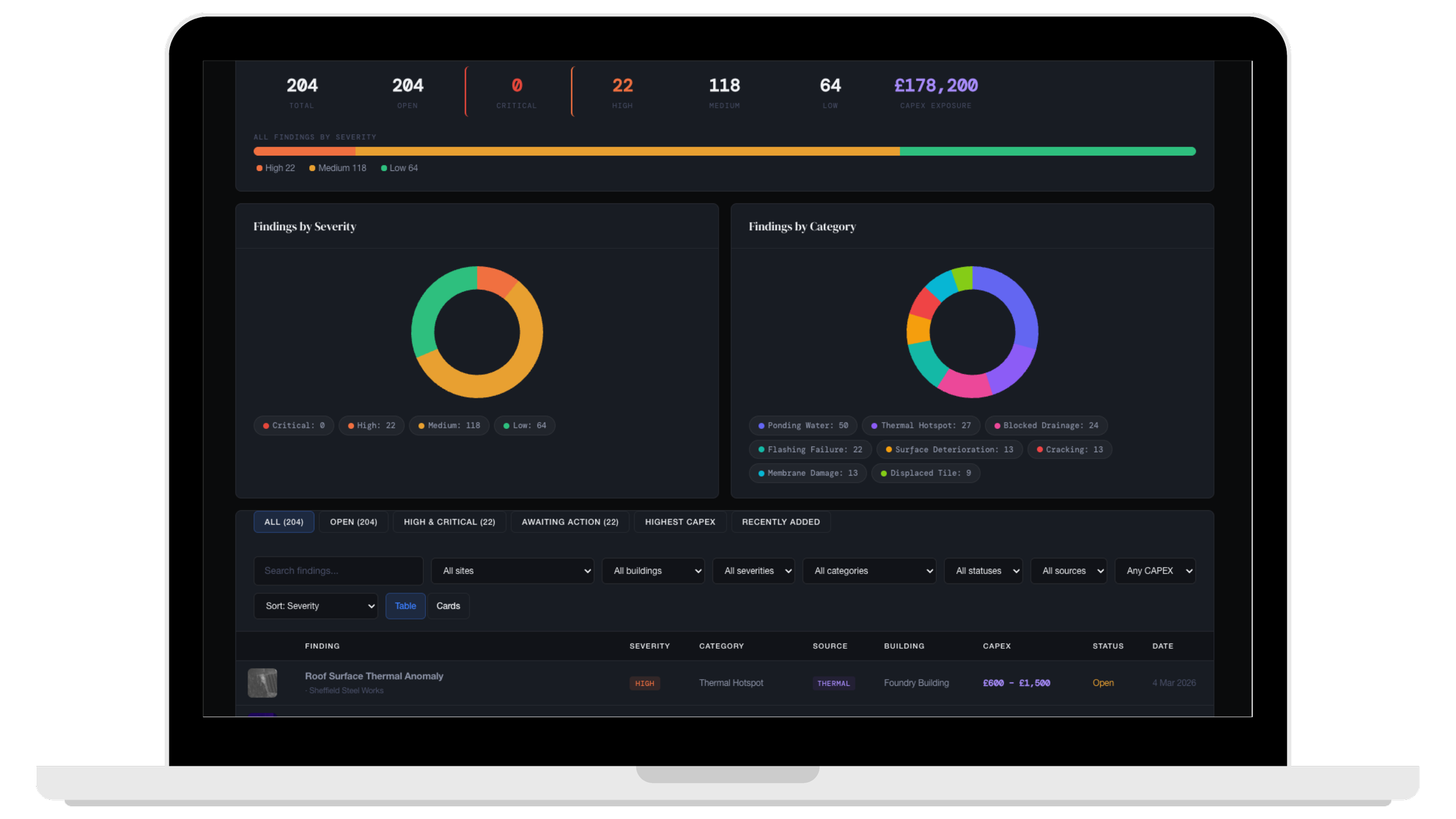
Prescribed documents and records
… form the second category. These include the fire risk assessment, the safety case report, structural assessments, maintenance records, and records of inspections carried out on the building. The regulations require these to be kept up to date and available to the BSR on request.
The critical phrase in the regulations — and the one that creates the most practical difficulty — is "kept up to date." SI 2024/41 doesn't contemplate a static archive of historical documents. It requires a living dataset that reflects the current state of the building. That's a fundamentally different obligation from simply having records on file.What "up to date" means for your inspection data
This is where the golden thread stops being an abstract compliance concept and starts affecting operational decisions. If your building information must reflect the current state of the building, then your inspection data must be current too. A condition survey from 2020 doesn't satisfy the requirement if it hasn't been refreshed since. A fire risk assessment from 2022 doesn't satisfy it if the building has undergone material changes in the interim.
For the building's physical fabric - the external envelope in particular - "up to date" implies a scheduled cycle of re-inspection. Not when something goes wrong. Not when a tenant complains. On a defined schedule, producing structured data that updates the golden thread record.
The regulations don't specify an exact inspection frequency, because the regime remains outcomes-based. But the expectation is clear: you must be able to demonstrate that the information you hold accurately represents the building as it is now. For most higher-risk buildings, that practically means annual or biannual inspection of the external envelope, with interim inspections triggered by events (storms, reported defects, completed remediation works).
The format of that data matters too. SI 2024/41 requires building information to be held in a manner that is "accessible, searchable, and storable." A folder of scanned PDFs on a shared drive doesn't meet that standard. The golden thread expects digital, structured, queryable data — the kind of output that comes from a proper building intelligence platform, not from a filing cabinet.
The retrospective assembly challenge
For newly constructed higher-risk buildings, the golden thread should in theory be established during the design and build phase, with information flowing from designers, contractors, and building control through to the accountable person at handover.
The reality is messier than that, but at least the regulatory architecture supports it. For existing buildings - the vast majority of current HRBs - the challenge is harder.
Many of these buildings were constructed decades ago, under different regulatory regimes, with incomplete or missing as-built records. The original design drawings may not exist. The cladding specification may never have been formally documented. The roof system may have been replaced or patched multiple times without a consolidated record of what's actually up there now.
SI 2024/41 doesn't exempt these buildings from the golden thread requirement. The principal accountable person must still assemble and maintain the required information. Where historical records are incomplete, that means generating new data — through intrusive surveys, desktop studies, or non-intrusive inspection, to fill the gaps.
This is particularly relevant for the building envelope. If you don't have reliable records of the roof covering system, the cladding makeup, or the condition of external elements, those gaps need to be closed through physical inspection.
UAV-based survey is one of the most efficient ways to do this. A combined visual and thermal drone survey can characterise the roof covering, identify the condition of cladding and facade elements, flag areas of concern, and produce the kind of structured, geotagged, categorised data that slots directly into a golden thread record.
Practical compliance: what you need to have in place
Working through SI 2024/41's requirements, the practical compliance checklist for building fabric data looks roughly like this.
A current condition record for the full building envelope.
This means the roof, facades, parapets, soffits, balconies, windows, and external drainage — not just the bits visible from ground level. The record should document the type and condition of each element, identify defects, and assign severity categories.

A structured defect register.
Defects need to be logged in a format that's searchable and trackable - not buried in narrative paragraphs within a PDF report. Each defect should have a location reference, a categorisation, a severity grading, and a recorded status (open, in remediation, resolved, or monitored).
Evidence of refresh.
The golden thread isn't a one-time assembly exercise. You need to show when the data was last updated, what changed, and when the next update is scheduled. Date-stamped inspection records, with comparison capability against previous inspections, are the clearest way to demonstrate this.
Linkage to the safety case.
The building's physical condition data should inform its safety case and risk assessments. If a defect is identified that affects fire compartmentation, structural integrity, or means of escape, there should be a documented link between the inspection finding and the corresponding risk assessment update. SI 2024/41 effectively requires the golden thread to function as an integrated system, not a collection of disconnected documents.Accessibility.
The BSR must be able to access the golden thread information on request. That means it needs to be held in a digital format, in a system that allows authorised access - not on a local hard drive in someone's office. A cloud-based building intelligence platform is the most practical solution for most organisations managing multiple HRBs.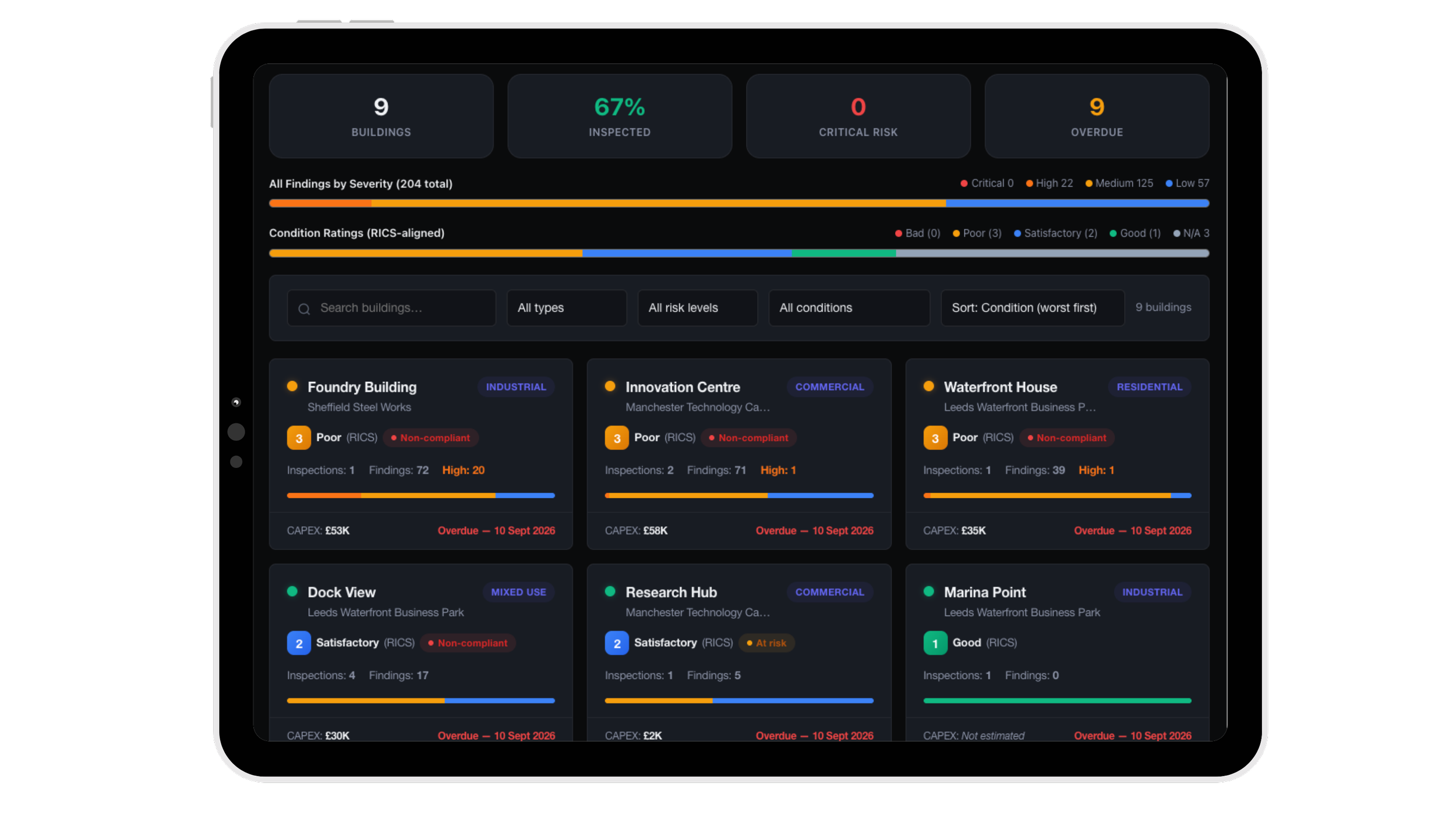
How Ovrsite supports golden thread compliance
Ovrsite's inspection and intelligence model was designed with the golden thread in mind. Our UAV surveys capture the physical condition data - visual and thermal, full envelope, structured and categorised - that forms a core component of the golden thread record.
Every inspection is date-stamped, geotagged, and delivered through Atlas in a format that's searchable, trackable, and accessible. For clients managing portfolios of higher-risk buildings, Atlas provides a single point of access for condition data across every building, with defect tracking over time, comparison between inspection cycles, and outputs formatted for BSR compliance.
When SI 2024/41 says your building data must be accessible, searchable, and up to date, that's precisely what Atlas delivers. If you're working through the golden thread requirements and your building fabric data has gaps - missing envelope coverage, outdated condition records, unstructured defect information - Ovrsite can help close them. Quickly, cost-effectively, and to a standard that satisfies the regulations.
Contact Ovrsite to discuss golden thread compliance for your higher-risk building portfolio.
Ovrsite is a UK building intelligence company delivering UAV-first inspection, structured defect registers, and compliance-aligned building data through the Atlas platform - supporting duty holders with golden thread and BAC readiness under the Building Safety Act 2022.