
Cladding: Not just a residential risk
When cladding is discussed, attention naturally moves to high rise residential buildings.
But large retail and commercial portfolios face a different challenge that is often underestimated:
Operational and financial exposure caused by unmanaged façade deterioration.
For supermarkets, retail estates, logistics facilities, and commercial portfolios, external envelope condition has direct implications for:
Public safety obligations
Insurance scrutiny
Water ingress and asset degradation
Energy inefficiency and thermal loss
Brand and reputational risk
Maintenance liability
Compliance with workplace and occupier safety duties
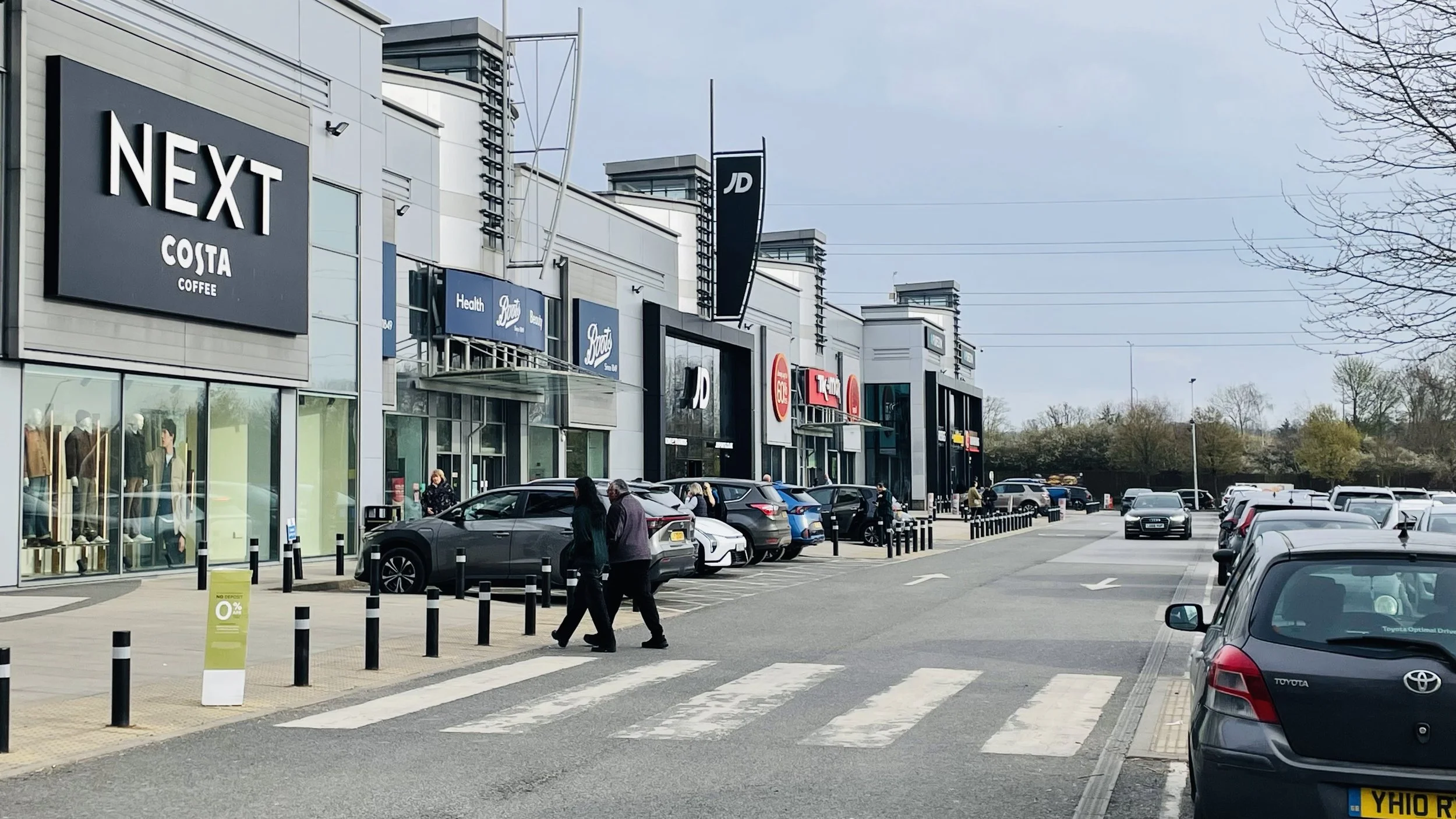
A typical UK retail park of modern metal structures shared by multiple businesses. High footfall, multiple access points and high risk as a result.
Unlike residential HRBs, the legal framework is different.
However, commercial property owners still carry significant responsibilities under legislation including:
General duties relating to safe maintenance of premises and building fabric
In practice, this means organisations are expected to:
Identify foreseeable risks
Maintain buildings safely
Evidence inspection and maintenance activity
Reduce risks to staff, contractors, and the public
The difficulty is scale. Large portfolios often contain multiple façade systems, ageing cladding and roof assets, legacy repair histories, limited visibility between inspections and inconsistent reporting standards across contractors.
As a result, many issues remain unnoticed until they become expensive, and traditional access-led inspections can also introduce their own challenges: disruption, health and safety exposure, inconsistency with contractors to name a few.
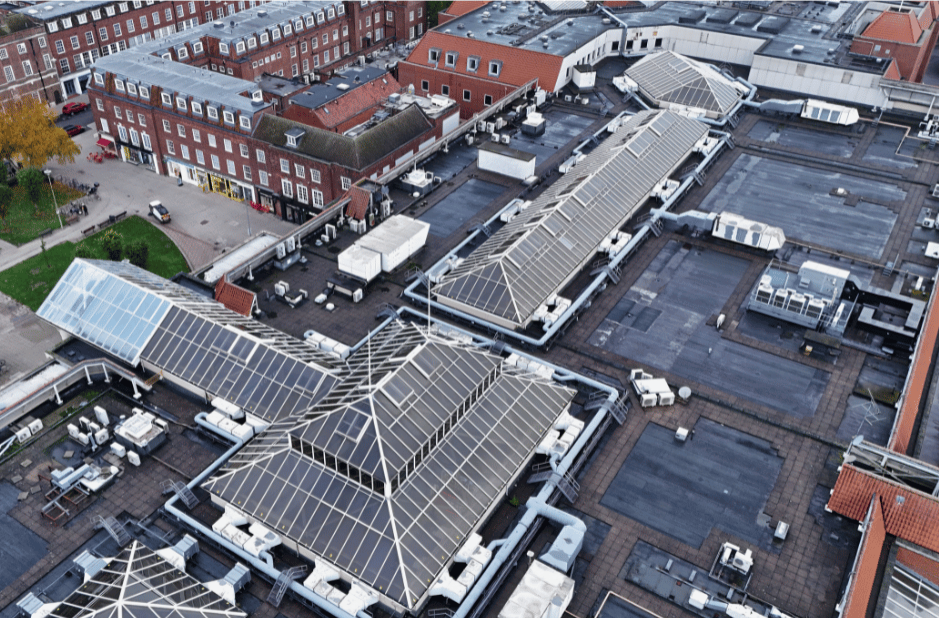
An aerial view of a UK shopping centre, taken by Ovrsite during an inspection of the complex, multi-material structure common across commercial buildings.
At Ovrsite, we help commercial portfolio owners improve visibility across external building assets without relying solely on reactive inspections.
Using UAV inspections and AI-assisted analysis, we’ve created a platform that helps convert large volumes of inspection imagery into:
Prioritised findings
Thermal and visual defect identification
Portfolio-wide condition oversight
RAG-rated risk outputs
Evidence-backed maintenance planning
It’s called Atlas, and our clients use it as their single source of truth. Not just for maintenance decisions and CAPEX planning, but also for compliance with their stakeholders, insurers and the regulator.
Every finding is reviewed and verified, creating a more defensible audit trail for facilities, estates, and compliance teams.
For many organisations, the value is not simply spotting issues earlier.
It is gaining a clearer understanding of portfolio-wide risk before issues escalate into operational disruption, insurance disputes, or costly reactive repairs.